


Stenton
Tree Location Map:

Swipe left or right to see additional photos
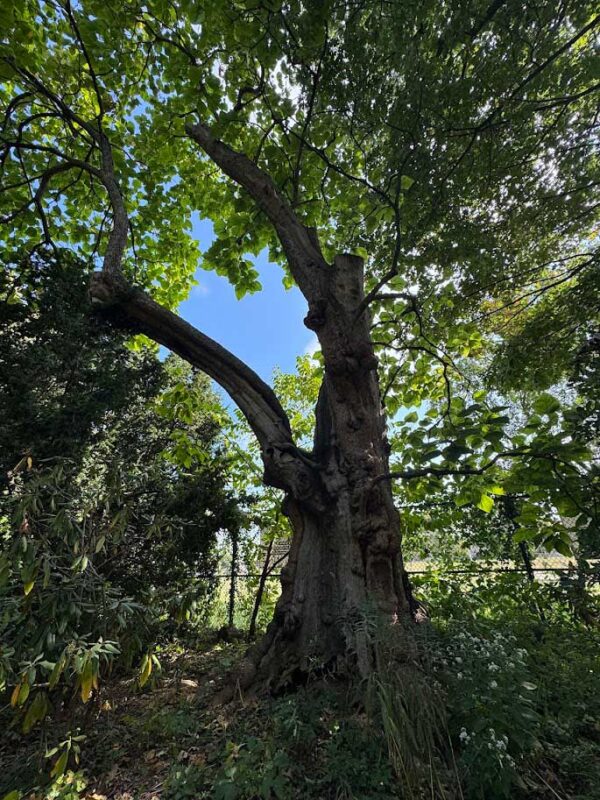
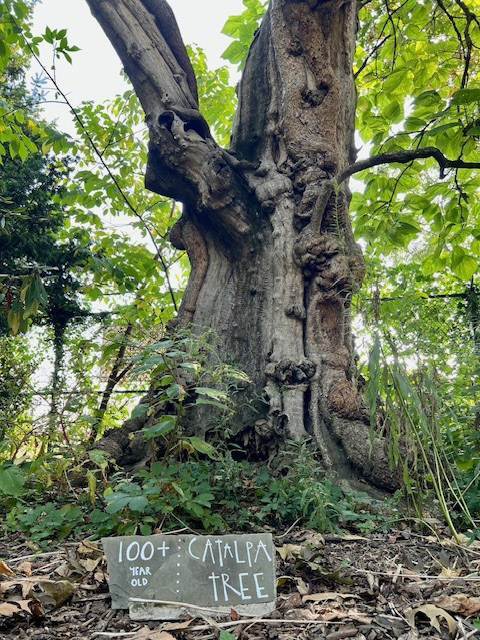
Northern Catalpa
Catalpa speciosa
Habit
The Catalpa looks like a tree you might see in a central American rainforest. Its cascading, heart-shaped leaves are big – up to a foot long, not including their stems. Its pyramidal flower clusters are large, lush, and showy, with tiers of trumpet shaped, frilly white blossoms sporting purple stripes, dots, and bright yellow blotches. The catalpa’s fruits are also outsized and tropical looking, resembling giant string beans stretched to many times their normal length.
Cultural Significance and Uses
The Catalpa is a native tree. It is widely planted in cities because of its rapid growth and tolerance of urban conditions. Early in the last century it was popular as a lumber source and was commonly planted in the Midwest as an ornamental.
Community Connections
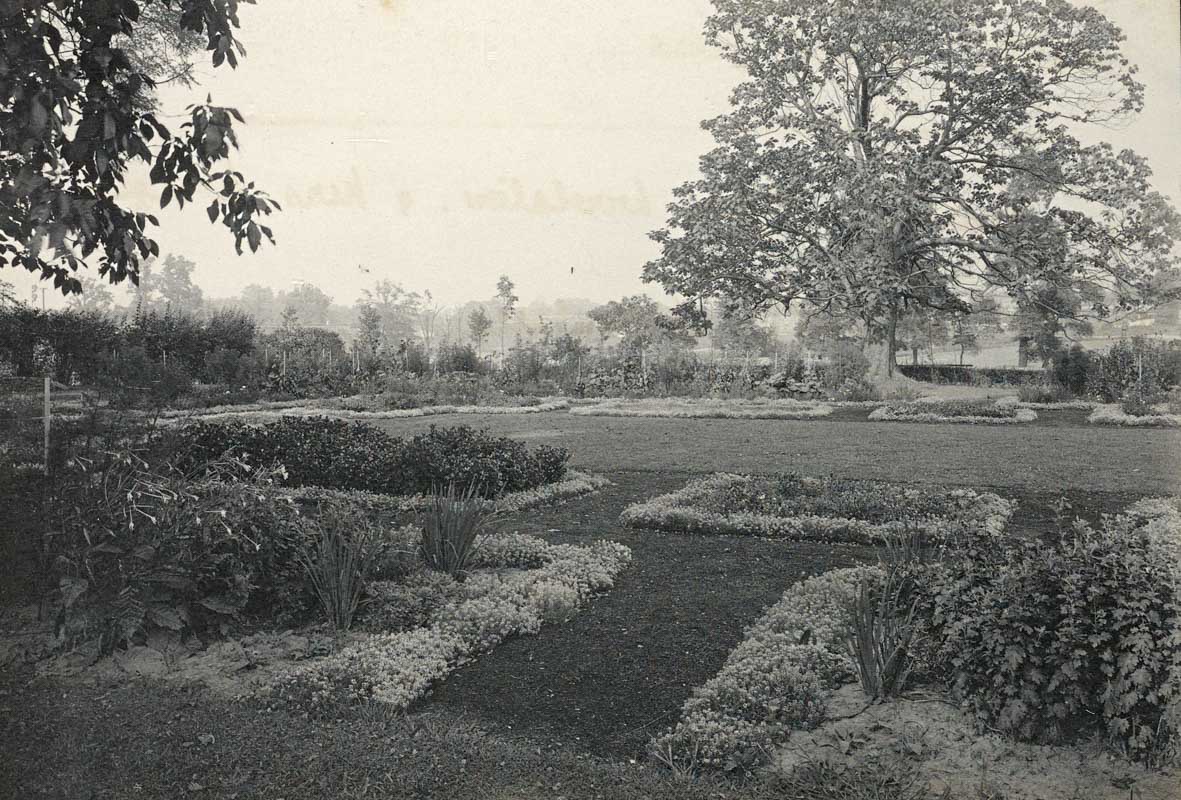
This northern catalpa is the oldest tree on Stenton’s property. It is estimated to have begun its life around 1860 – possibly as a naturally seeded tree in an area that was maintained as a meadow at that time. In the historic 1911 photo of the Colonial Revival Garden, you can see the full-grown Catalpa tree in the background.
Species information:
Meyer, Paul, et al. Philadelphia Trees: A Field Guide to the City and the Surrounding Delaware Valley. University of Pennsylvania Press, 2023.
Brickell, Christopher, editor. American Horticultural Society A to Z Encyclopedia of Garden Plants. Revised ed., DK Publishing, 2004.
Dirr, Michael A. Dirr’s Hardy Trees and Shrubs: An Illustrated Encyclopedia. Timber Press, 1997.
Don’t forget to write the featured tree species for this site in the back of your Stamp Rally booklet in order to claim prizes!
For more information on Scavenger Hunt prizes, visit the Stamp Rally page here.